

The 13 Best Ways to Respond to an Insult Witty and Clever can help you answer rude comments with calm, confidence, and control in difficult moments.
When someone makes a rude comment, having the perfect comeback ready isn’t always easy. However, knowing How to Respond to an Insult Witty Replies helps you stay calm when facing criticism, sarcasm, or disrespect.
The right response doesn’t need an argument. Instead, use wit, emotional intelligence, and clever communication skills to manage difficult situations with confidence and grace. Whether you’re having personal conversations, participating in social settings, or working in professional environments, choosing your words carefully matters.
Strong communication, business communication, English usage, grammar, formal writing, and consistency can also improve how you express yourself. A smart response can defuse tension, protect your reputation, and demonstrate confidence without escalating the situation.
In many situations, practical responses work better than lengthy explanations. Memorable responses that combine humor and composure often leave a stronger impression. The following examples can strengthen your verbal skills and broader communication habits.
Even tasks involving time management, project management, meetings, calendar organization, scheduling, online booking, and broadcasting require professionalism, quick thinking, and essential communication skills. Developing these abilities makes challenging interactions easier to handle with confidence and ease.
Quick Answer
The best way to respond to an insult is to stay calm and reply confidently. You can say, “Thanks for your opinion,” “Was that supposed to hurt my feelings?” or “I don’t remember asking for your opinion.” Choose a witty comeback for playful teasing, a firm response for disrespect, or silence when someone simply wants to provoke you. Remember, you don’t need to insult someone back to stand up for yourself.
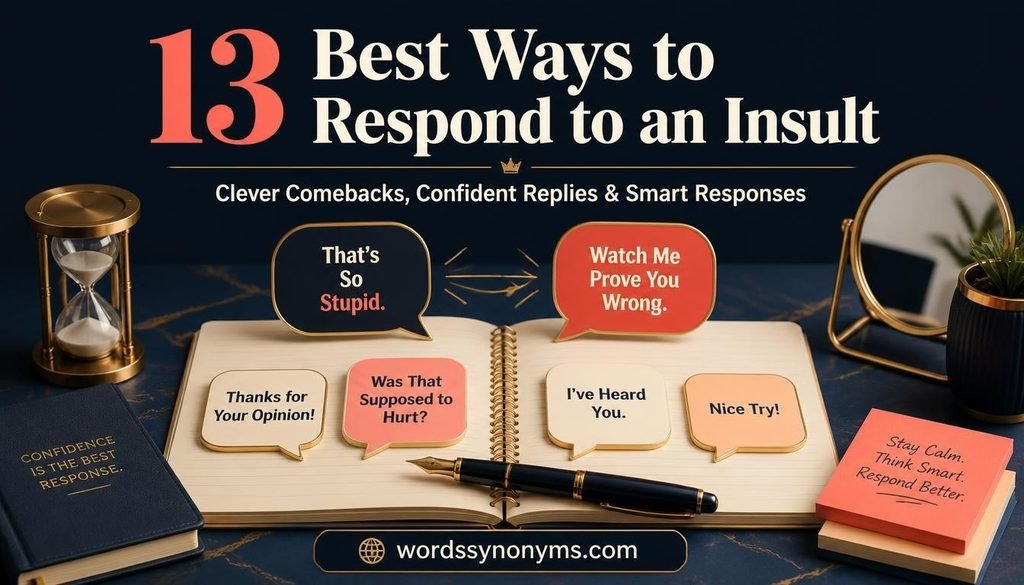
13 Best Ways to Respond to an Insult
Not every insult deserves the same response. A sarcastic comment from a close friend requires a different approach than deliberate disrespect from a coworker.
Before choosing your words, consider the person’s intention and your relationship with them. You should also think about whether responding will improve the situation.
Here are 13 clever and practical responses you can use when someone insults you.
“Thanks for Your Opinion!”
Sometimes, the simplest response makes the strongest impression. Saying “Thanks for your opinion!” acknowledges what someone said without suggesting that you agree.
This reply works particularly well when someone offers unwanted criticism. Instead of defending yourself or explaining every little detail, you politely end the discussion.
For example, imagine someone criticizes your clothing and says, “You really need to improve your fashion sense.” You could simply smile and respond, “Thanks for your opinion!”
The beauty of this response lies in its simplicity. You don’t sound desperate for approval or interested in starting an argument.
When to use this response:
- Someone criticizes your appearance unnecessarily.
- A person gives unsolicited advice about your choices.
- Someone makes a judgment about your lifestyle.
- You want to acknowledge a comment without continuing the conversation.
Example conversation:
Person: “That outfit doesn’t look good on you.”
You: “Thanks for your opinion!”
Person: “I’m just being honest.”
You: “And I’ve heard you.”
Keep your delivery relaxed. If you sound overly irritated, the response might lose its intended effect.
“Was That Supposed to Hurt My Feelings?”
Want a comeback that sounds witty without becoming unnecessarily offensive? This question can work surprisingly well.
When someone insults you, they often expect an emotional reaction. They might want you to become embarrassed, defensive, or visibly upset.
Asking, “Was that supposed to hurt my feelings?” challenges that expectation. It communicates that their comment hasn’t achieved the reaction they wanted.
For example, someone might make fun of your hairstyle or criticize your personal preferences. Instead of immediately returning the insult, ask this question with a relaxed expression.
However, timing matters. This response works better in casual disagreements than serious confrontations.
When to use this response:
- Someone makes a childish joke at your expense.
- A person tries to embarrass you in front of friends.
- Someone repeatedly makes sarcastic comments.
- You want to respond with humor rather than anger.
Example conversation:
Person: “Your sense of humor is terrible.”
You: “Was that supposed to hurt my feelings?”
Person: “I was just joking.”
You: “Then I guess the joke needs some work.”
A little confidence goes a long way here. You don’t need to raise your voice or turn the exchange into a competition.
“I Don’t Remember Asking for Your Opinion.”
Some people feel comfortable commenting on everything, even when nobody asks them. They might criticize your decisions, appearance, career, or personal interests.
In these situations, “I don’t remember asking for your opinion” establishes a clear boundary.
This response is direct and slightly sarcastic. It reminds the other person that unsolicited criticism isn’t automatically welcome.
For example, suppose someone comments negatively about your career choice. They might say, “You should have chosen something more practical.”
You can respond, “I don’t remember asking for your opinion.”
The statement makes your position clear without requiring a lengthy explanation.
When to use this response:
- Someone gives unwanted personal criticism.
- A person interferes with decisions that don’t concern them.
- Someone comments negatively on your interests.
- You want to stop an unnecessary discussion.
Example conversation:
Person: “You should really change your hairstyle.”
You: “I don’t remember asking for your opinion.”
Person: “I’m only trying to help.”
You: “I’ll ask if I need advice.”
Remember that this comeback can sound dismissive. Use it when someone genuinely crosses a boundary rather than when a friend offers helpful feedback.
“You Must Be Having a Bad Day.”
Not every rude comment deserves a personal response. Sometimes, acknowledging someone’s unpleasant behavior without attacking them can be more effective.
“You must be having a bad day” is a clever way to address unnecessary hostility. It suggests that the person’s behavior might reflect their mood rather than anything about you.
Imagine walking into a room and receiving an unexpectedly rude comment. Instead of becoming defensive, you could respond with this sentence.
It keeps your reply relatively light while making the other person aware of their behavior.
However, avoid assuming that every rude person has personal problems. The phrase works best as a conversational response rather than a serious judgment about someone’s emotional state.
When to use this response:
- Someone speaks rudely without a clear reason.
- A stranger makes an unnecessary comment.
- Someone behaves impatiently during a casual conversation.
- You want to avoid matching another person’s negativity.
Example conversation:
Person: “You never have anything intelligent to say.”
You: “You must be having a bad day.”
Person: “What does that mean?”
You: “Just wondering why you’re being so unpleasant.”
This response allows you to address disrespect without turning the conversation into a shouting match.
“That’s an Interesting Thing to Say Out Loud.”
Some insults reveal more about the speaker’s attitude than the person receiving them. Instead of responding with another insult, you can calmly point out how inappropriate their comment sounds.
“That’s an interesting thing to say out loud” is a subtle comeback that encourages someone to reconsider their words.
It works particularly well when a person makes an offensive joke or says something unnecessarily judgmental.
For example, imagine someone makes a rude comment about another person’s appearance during a group conversation. You could respond with this sentence.
Rather than attacking the speaker, you’re drawing attention to what they actually said.
When to use this response:
- Someone makes an inappropriate joke.
- A person says something disrespectful in public.
- Someone makes a judgmental comment about another individual.
- You want to challenge bad behavior without becoming aggressive.
Example conversation:
Person: “Nobody would want to work with someone like you.”
You: “That’s an interesting thing to say out loud.”
Person: “Why?”
You: “Because it says quite a bit about your attitude.”
The response works best when delivered calmly. A dramatic reaction might distract from the point you’re trying to make.
“I’m Comfortable With Who I Am.”
Personal insults can sometimes make you question yourself. Someone might criticize your appearance, personality, interests, or lifestyle.
However, you don’t have to defend every part of your identity to satisfy someone else’s expectations.
“I’m comfortable with who I am” is a confident response that communicates self-acceptance. It shows that another person’s judgment doesn’t determine your worth.
For instance, someone might criticize your quiet personality and suggest that you should become more outgoing.
You could simply respond, “I’m comfortable with who I am.”
You aren’t claiming to be perfect. You’re expressing that you don’t need someone else’s approval to feel secure.
When to use this response:
- Someone criticizes your personality.
- A person makes negative comments about your appearance.
- Someone questions your interests or lifestyle.
- You want to respond confidently without becoming defensive.
Example conversation:
Person: “You’re too quiet. You should talk more.”
You: “I’m comfortable with who I am.”
Person: “Don’t you want to be more interesting?”
You: “I’m not trying to impress everyone.”
This response is particularly useful because it doesn’t depend on clever wording. Your confidence gives the sentence its meaning.
“Let’s Agree to Disagree.”
Arguments sometimes become personal when people run out of reasonable things to say. Instead of discussing the actual issue, someone might start criticizing your intelligence, opinions, or decisions.
“Let’s agree to disagree” offers a way to end that exchange without accepting disrespect.
It communicates that two people can hold different opinions without insulting each other.
For example, imagine discussing a movie, political issue, or personal preference with someone. The disagreement becomes heated, and the other person starts making personal remarks.
You can respond, “Let’s agree to disagree.”
This sentence moves the conversation away from unnecessary conflict.
When to use this response:
- Someone turns a disagreement into a personal argument.
- A conversation becomes increasingly uncomfortable.
- You don’t want to waste time proving your opinion.
- Both people have different perspectives and neither wants to change their mind.
Example conversation:
Person: “Only an idiot would think that.”
You: “Let’s agree to disagree.”
Person: “So you admit you’re wrong?”
You: “No. I just don’t need to argue about it.”
One important distinction matters here. Agreeing to disagree doesn’t mean accepting someone’s insult. It means refusing to continue an unproductive discussion.
“That’s Not Very Nice, Is It?”
Sometimes, direct language works better than a complicated comeback. If someone says something hurtful, you can simply point out that their behavior isn’t acceptable.
“That’s not very nice, is it?” is a straightforward response that highlights disrespect.
It can also make someone reconsider a comment they thought was harmless.
For example, imagine a friend makes a joke about something you’re sensitive about. You don’t need to laugh along just because everyone else does.
Instead, you can calmly say, “That’s not very nice, is it?”
The sentence communicates discomfort without creating unnecessary drama.
When to use this response:
- A friend makes a hurtful joke.
- Someone uses humor to disguise an insult.
- A person makes a disrespectful comment in a group.
- You want to address the behavior directly.
Example conversation:
Person: “You’re always making mistakes. It’s almost impressive.”
You: “That’s not very nice, is it?”
Person: “Relax. It was just a joke.”
You: “A joke should be funny to everyone involved.”
This response is especially useful when you want someone to understand that their words crossed a line.
“If You Say So.”
Some people enjoy arguing because they want the last word. They might repeat their criticism, exaggerate their opinions, or try to convince you that their judgment is correct.
“If you say so” offers a short way to avoid that exhausting exchange.
The phrase acknowledges what someone said without confirming that you agree. It also signals that you aren’t interested in debating their opinion.
For example, someone might tell you that you’ll never succeed at something. Rather than explaining your entire plan, you can respond, “If you say so.”
When to use this response:
- Someone makes an exaggerated judgment about you.
- A person repeatedly criticizes your decisions.
- Someone tries to provoke you into defending yourself.
- You want to end a pointless disagreement.
Example conversation:
Person: “You’ll never be good at this.”
You: “If you say so.”
Person: “I’m just telling the truth.”
You: “That’s your opinion.”
Keep in mind that this response can sound dismissive. It isn’t the best choice when someone offers genuine advice or constructive criticism.
“I Hope You Feel Better After Saying That.”
Some people make insults simply to get a reaction. They might enjoy watching someone become upset or embarrassed.
“I hope you feel better after saying that” is a pointed response that highlights the unnecessary nature of their comment.
Rather than returning the insult, you make it clear that their behavior wasn’t helpful or appropriate.
For example, imagine someone makes a personal remark during a disagreement. You could respond with this sentence and then move on.
The phrase can sound sarcastic, so use it carefully. Its purpose isn’t to humiliate the other person. It’s to communicate that you won’t participate in their attempt to provoke you.
When to use this response:
- Someone deliberately tries to upset you.
- A person makes a personal attack during an argument.
- Someone repeatedly uses sarcasm to embarrass you.
- You want to end a negative interaction.
Example conversation:
Person: “Nobody takes you seriously.”
You: “I hope you feel better after saying that.”
Person: “Why are you getting upset?”
You: “I’m not. I just don’t see a reason to continue this conversation.”
Sometimes, ending the conversation matters more than delivering the perfect comeback.
“That’s Your Perspective, Not My Reality.”
Other people’s opinions can influence how you see yourself, especially when they criticize something important to you.
However, one person’s judgment doesn’t automatically become a fact.
“That’s your perspective, not my reality” is a confident response to unfair assumptions. It reminds the speaker that their interpretation isn’t the only possible truth.
For example, someone might tell you that you’re unsuccessful because your career doesn’t match their expectations.
Instead of explaining your personal goals, you can say, “That’s your perspective, not my reality.”
This response separates your own understanding of your life from someone else’s judgment.
When to use this response:
- Someone makes assumptions about your achievements.
- A person criticizes your personal choices.
- Someone judges your lifestyle using their own standards.
- You want to defend your perspective without arguing.
Example conversation:
Person: “You’re wasting your time with that career.”
You: “That’s your perspective, not my reality.”
Person: “You’ll understand someday.”
You: “I’m happy with the direction I’m taking.”
The response works particularly well when someone confuses personal preferences with universal rules.
“Can You Explain What You Mean by That?”
Questions can sometimes be more effective than comebacks. When someone makes an insulting remark, asking them to explain can encourage them to reconsider their words.
“Can you explain what you mean by that?” is especially useful for handling backhanded compliments and indirect insults.
A backhanded compliment sounds positive initially but contains an underlying criticism.
For example, someone might say, “You’re surprisingly good at this for a beginner.”
Instead of pretending the comment was entirely complimentary, ask what they mean.
This approach gives the other person an opportunity to clarify their intention. It also helps you avoid making assumptions about what they intended.
When to use this response:
- Someone makes a backhanded compliment.
- A person uses indirect insults.
- Someone makes a confusing or inappropriate joke.
- You want clarification before deciding how to respond.
Example conversation:
Person: “You’re actually quite smart when you try.”
You: “Can you explain what you mean by that?”
Person: “I mean, you’re smarter than I expected.”
You: “That’s an unusual way to give someone a compliment.”
Asking for clarification can reveal whether someone made an innocent remark or intentionally tried to insult you.
“I’m Not Going to Entertain That.”
Not every conversation deserves your attention. When someone repeatedly insults you or refuses to communicate respectfully, ending the interaction may be the most sensible choice.
“I’m not going to entertain that” is a firm response that establishes a clear boundary.
Unlike sarcastic comebacks, this sentence doesn’t try to make the other person laugh or feel embarrassed. It simply communicates that you won’t participate in disrespectful behavior.
For example, imagine someone repeatedly makes personal attacks during an argument. You’ve already asked them to stop, but they continue.
You can say, “I’m not going to entertain that.”
Then change the subject, leave the conversation, or stop responding.
When to use this response:
- Someone repeatedly insults you.
- A person refuses to respect your boundaries.
- A conversation becomes unnecessarily hostile.
- You want to disengage without exchanging more insults.
Example conversation:
Person: “You’re too sensitive to handle an honest conversation.”
You: “I’m not going to entertain that.”
Person: “You just can’t handle the truth.”
You: “We can talk when you’re ready to be respectful.”
Remember, you don’t have to win every argument. Sometimes, refusing to participate is the clearest statement you can make.
Read more: Comma Before “Even”: When to Use It and When to Skip It
How to Choose the Best Response to an Insult
Choosing the right comeback depends on more than finding a clever sentence. You should consider the situation, your relationship with the speaker, and the consequences of your response.
A reply that makes your friends laugh might sound inappropriate during a workplace disagreement. Similarly, a sarcastic comment might escalate an already uncomfortable situation.
Before responding, consider these factors.
Understand the Person’s Intention
Not every negative comment comes from the same place. Some people tease their friends without realizing that their jokes hurt. Others deliberately use insults to embarrass or provoke someone.
Try to understand the difference before choosing your response.
For example:
- Friendly teasing: Respond with light humor if everyone feels comfortable.
- Unwanted criticism: Use a polite but firm reply.
- Deliberate disrespect: Establish a clear boundary.
- Repeated harassment: Disengage and consider seeking support.
Understanding someone’s intention doesn’t mean excusing their behavior. It simply helps you choose a more suitable response.
Consider Your Relationship With the Person
Your relationship should influence how you communicate.
You might use playful sarcasm with a close friend because you understand each other’s humor. However, the same response could sound disrespectful when directed toward your manager.
Think about whether your reply will improve the situation or damage an important relationship.
When in doubt, choose clear and respectful language.
Decide Whether Humor Is Appropriate
Humor can make an uncomfortable situation feel less serious. A witty comeback might also show that you aren’t easily embarrassed by someone’s comment.
However, humor isn’t always appropriate.
If someone repeatedly insults you or makes deeply personal remarks, a serious response may communicate your boundaries more effectively.
A useful rule: Use humor for harmless teasing and direct communication for genuine disrespect.
Know When to Walk Away
You don’t have to respond to every insult. Some people deliberately create arguments because they enjoy the attention.
If someone refuses to communicate respectfully, continuing the discussion might accomplish very little.
You can end the conversation by saying:
- “I’m done discussing this.”
- “Let’s talk when things calm down.”
- “This conversation isn’t going anywhere.”
- “I don’t appreciate being spoken to that way.”
Walking away doesn’t mean you’ve lost. It means you’ve decided where your attention belongs.
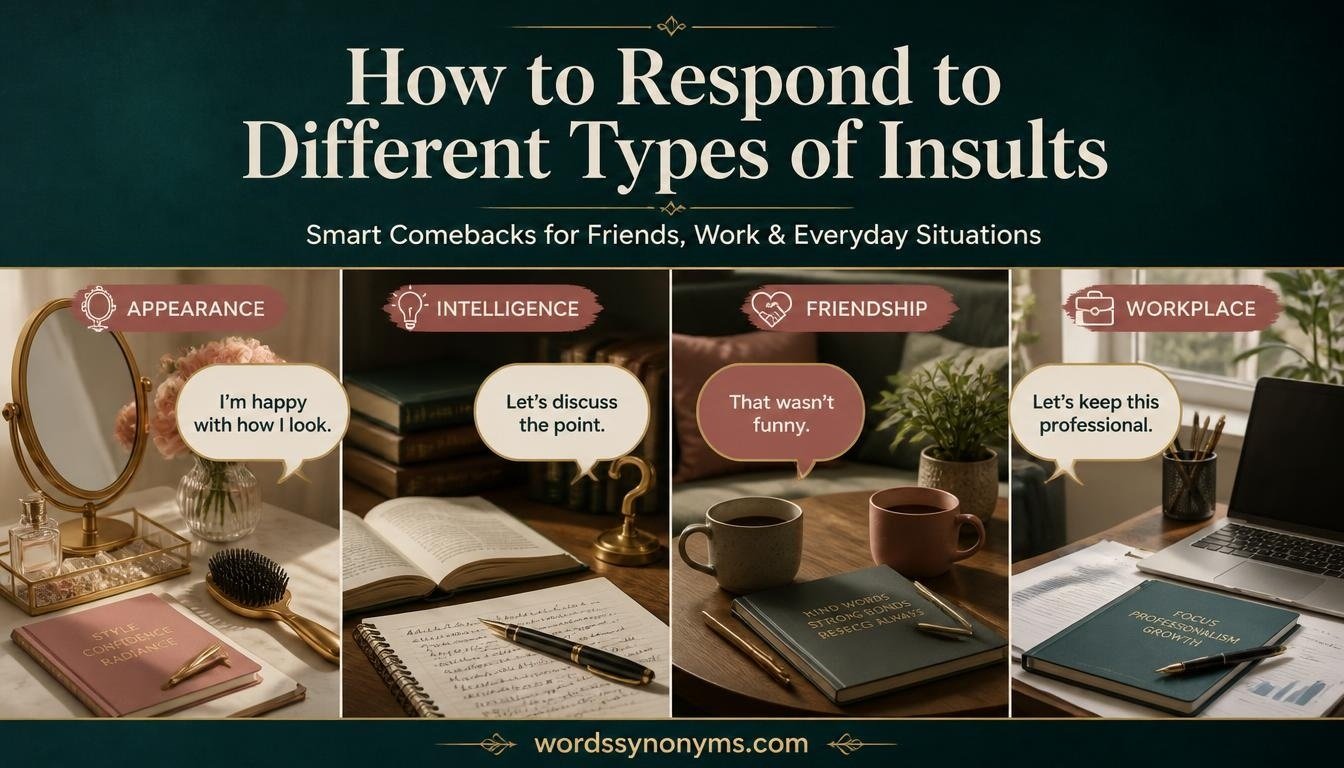
How to Respond to Different Types of Insults
The same comeback doesn’t work in every situation. Personal insults, workplace disagreements, and online arguments require different approaches.
Here are practical ways to respond to some common types of disrespect.
How to Respond to an Insult About Your Appearance
Comments about appearance can feel particularly personal because they target something people may already feel sensitive about.
Someone might criticize your clothes, hairstyle, body shape, or facial features. Although you cannot control every opinion, you can decide how much importance to give it.
A confident response doesn’t require explaining why you look the way you do.
Try these replies:
- “I’m happy with how I look.”
- “Good thing I’m dressing for myself.”
- “That’s an unnecessary comment.”
- “I didn’t ask for a fashion review.”
- “Everyone has different preferences.”
Example conversation:
Person: “That haircut doesn’t suit you.”
You: “Good thing I got it for myself.”
If the comment comes from someone close to you, you can also explain that their words hurt. You don’t need to turn every uncomfortable moment into a battle of insults.
How to Respond When Someone Insults Your Intelligence
An insult about intelligence can make you feel pressured to prove yourself. Someone might question your knowledge, dismiss your ideas, or suggest that you’re incapable.
However, you don’t need to demonstrate your intelligence every time someone challenges it.
Instead, respond to the actual behavior.
Here are some useful replies:
- “You can disagree without being disrespectful.”
- “Let’s discuss the point instead of making it personal.”
- “That’s an interesting assumption.”
- “I’m open to a meaningful discussion.”
- “Insulting me doesn’t make your argument stronger.”
Example conversation:
Person: “You clearly don’t understand anything.”
You: “Then explain your point instead of insulting me.”
This approach redirects attention toward the discussion. It also makes it harder for the other person to avoid addressing the actual issue.
How to Respond to Insults From Friends
Friends often tease each other, share jokes, and make sarcastic comments. In healthy friendships, everyone should feel comfortable laughing without feeling humiliated.
However, friendship doesn’t give someone permission to repeatedly make hurtful remarks.
If a friend crosses the line, address it honestly.
Try these responses:
- “Okay, that was unnecessary.”
- “You know I don’t appreciate jokes like that.”
- “Let’s not make this personal.”
- “I can take a joke, but that wasn’t funny.”
- “You’re my friend, so I expected better.”
Example conversation:
Friend: “You’re always the least interesting person here.”
You: “That’s a little harsh, don’t you think?”
Friend: “Relax. I’m joking.”
You: “I know you like joking, but that one wasn’t funny.”
A genuine friend should be willing to understand your feelings. You don’t have to pretend something is funny just to keep everyone comfortable.
How to Respond to Insults at Work
Workplace insults require a more professional approach. A sarcastic comeback might feel satisfying temporarily, but it can create unnecessary problems.
Instead, focus on the behavior and keep your language clear.
For example, if a coworker dismisses your contribution during a meeting, you could say, “I’d appreciate feedback about the work rather than personal comments.”
This response keeps attention on the professional issue.
Other useful replies include:
- “Let’s keep this professional.”
- “I’m happy to discuss constructive feedback.”
- “Please address the issue rather than making personal remarks.”
- “Could you explain your concern respectfully?”
- “Let’s focus on the project.”
Example conversation:
Coworker: “You clearly don’t know how to handle this assignment.”
You: “If you have specific feedback, I’m happy to hear it.”
Coworker: “I’m saying you’re not capable.”
You: “Let’s discuss the actual work and identify what’s missing.”
If the behavior continues, document specific incidents, including dates and relevant messages. Depending on your workplace, you may need to raise the issue with a supervisor or human resources representative.
How to Respond to Insults Online
Online conversations can become unpleasant quickly. People sometimes feel more comfortable making rude comments behind a screen than they would during an in-person conversation.
However, you don’t need to answer every negative comment.
Before replying, consider whether the person wants a genuine discussion or simply wants attention.
If you decide to respond, keep your message short and composed.
Here are some useful online replies:
- “Thanks for sharing your opinion.”
- “We clearly see things differently.”
- “That’s unnecessary.”
- “Let’s keep the conversation respectful.”
- “I’m not interested in arguing.”
Example conversation:
Comment: “Your content is terrible. Stop posting.”
Reply: “You’re welcome to disagree, but there’s no need for personal attacks.”
Sometimes, the smartest response is no response at all.
You can also use platform tools to:
- Block accounts that repeatedly harass you.
- Mute conversations that create unnecessary stress.
- Report abusive or threatening messages.
- Save evidence of serious harassment.
- Limit who can comment on your posts.
Remember that online attention isn’t always worth your time.
What to Say When Someone Insults You and You Don’t Know What to Say
Sometimes, the perfect comeback doesn’t arrive until the conversation has ended. You might think of several clever responses later while replaying the situation in your head.
That’s completely normal.
When someone catches you off guard, you don’t have to produce a witty sentence immediately. Taking a moment to think can prevent you from saying something you’ll regret.
If you need a quick response, keep a few simple phrases in mind.
| Situation | What You Can Say |
| Someone makes a rude comment | “That’s unnecessary.” |
| Someone gives unwanted advice | “I’ll keep that in mind.” |
| Someone tries to embarrass you | “Was that really necessary?” |
| Someone makes a personal attack | “Let’s not make this personal.” |
| Someone questions your choices | “I’m happy with my decision.” |
| Someone refuses to listen | “I don’t think this conversation is productive.” |
| Someone makes an offensive joke | “I don’t find that funny.” |
| Someone keeps arguing | “I’m not interested in continuing this.” |
| Someone makes an unfair judgment | “You don’t know the whole story.” |
| Someone crosses a boundary | “Please don’t speak to me that way.” |
These responses work because they’re easy to remember and don’t require complicated explanations.
You can also use a simple question when you’re unsure how to interpret a comment.
For example, “What do you mean by that?” gives the other person an opportunity to explain themselves.
If their intention becomes clear, you’ll have a better idea of how to respond.
Is It Better to Ignore an Insult or Respond?
Ignoring an insult and responding to it can both be reasonable choices. The better option depends on the circumstances.
Sometimes, responding establishes an important boundary. Other times, silence prevents a minor disagreement from becoming a bigger problem.
The key is recognizing which situation you’re dealing with.
When Ignoring an Insult Makes Sense
Ignoring someone can be useful when their comment doesn’t deserve your attention.
For example, a stranger might make a random negative remark while you’re shopping. Engaging with that person probably won’t improve your day.
Ignoring the comment can help you avoid unnecessary conflict.
Consider ignoring an insult when:
- A stranger makes a meaningless comment.
- Someone is clearly trying to provoke you.
- The disagreement has no practical importance.
- Responding could create a safety concern.
- You’ve already explained your position.
Silence can be a deliberate choice rather than a sign of weakness.
When You Should Respond
However, ignoring every insult isn’t always healthy. Repeated disrespect can affect your confidence and relationships.
If someone continually crosses your boundaries, speaking up may be necessary.
Consider responding when:
- A friend repeatedly makes hurtful jokes.
- A coworker disrespects you during meetings.
- Someone makes inappropriate personal remarks.
- A person spreads harmful false statements about you.
- Your silence could be mistaken for agreement.
You don’t need to deliver an aggressive comeback. A direct statement can communicate your expectations.
For example, “I don’t appreciate those comments. Please stop” is clear and difficult to misunderstand.
Ignore or Respond? A Quick Comparison
| Situation | Better Approach | Reason |
| Random insult from a stranger | Ignore or disengage | Avoid unnecessary conflict |
| Friendly teasing | Lighthearted response | Keep the interaction comfortable |
| Repeated personal insults | Set a boundary | Make your expectations clear |
| Workplace disrespect | Professional response | Protect communication and work relationships |
| Online trolling | Ignore, block, or report | Avoid feeding unwanted attention |
| Offensive joke from a friend | Address it directly | Prevent repeated hurtful behavior |
| Threatening comments | Prioritize safety | Avoid escalating a potentially dangerous situation |
The important thing is to respond intentionally. You shouldn’t feel obligated to defend yourself against every negative opinion.
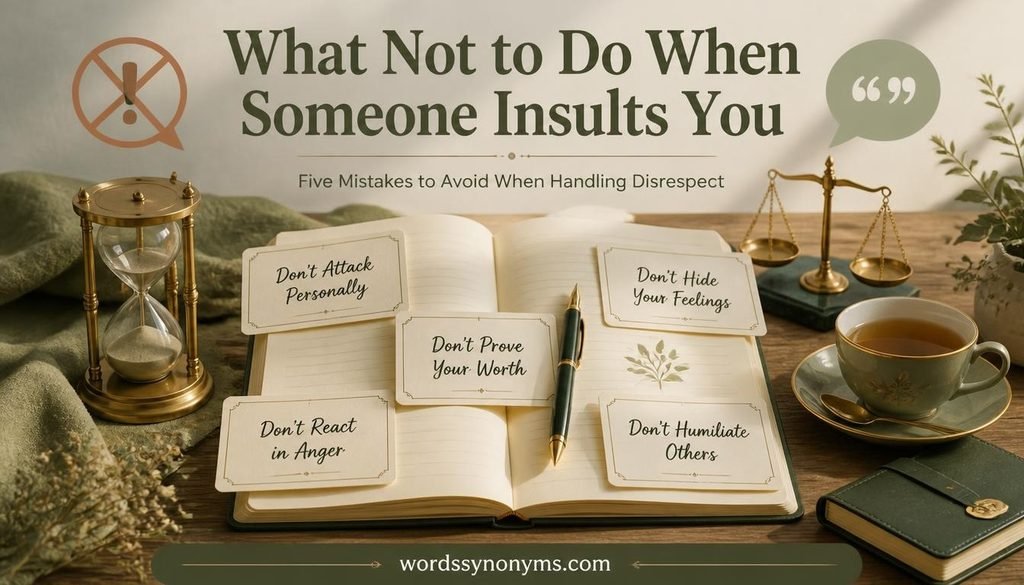
What Not to Do When Someone Insults You
A clever response can help you handle disrespect, but your reaction also matters. Sometimes, trying too hard to win an argument creates more problems than the original insult.
Avoid these common mistakes when someone says something hurtful.
Don’t Respond With Personal Attacks
Returning an insult might feel satisfying for a moment. However, it can turn a simple disagreement into an exchange of personal attacks.
Instead of criticizing someone’s appearance, intelligence, or family, address their actual behavior.
For example, say, “That comment was disrespectful” rather than attacking their character.
This keeps your response focused and reasonable.
Don’t Feel Obligated to Prove Your Worth
When someone questions your abilities, you might feel tempted to explain every achievement.
However, your worth doesn’t depend on convincing every person you meet.
If someone makes an unfair judgment, you can calmly disagree and move on.
You don’t need to turn your life into a presentation just to satisfy one person’s opinion.
Don’t Laugh Along When You’re Genuinely Hurt
Sometimes, people laugh at insulting jokes because they don’t want to make the situation uncomfortable.
However, pretending something is funny can encourage the same behavior again.
If a comment genuinely hurts you, it’s perfectly reasonable to say so.
Try something simple: “I know you’re joking, but I don’t appreciate comments like that.”
Honest communication is usually more useful than pretending everything is fine.
Don’t Let Anger Control Your Response
Anger can make you say things that don’t reflect what you actually believe.
Before replying, take a breath and give yourself a moment.
You might discover that a short response works better than a lengthy argument.
Remember, being confident doesn’t require being loud.
Don’t Confuse Confidence With Humiliating Someone
There’s a difference between defending yourself and deliberately embarrassing another person.
A confident response protects your boundaries without trying to destroy someone else’s self-esteem.
You can be firm, witty, and direct while still treating people respectfully.
Read more: Why Does “Polly Want a Cracker”? Meaning and History Explained
FAQs
1. What is the best way to respond to an insult?
The best response is one that keeps you calm and confident. Use a clever comeback, a little humor, or a short statement that makes your point without starting an argument.
2. How do you respond to an insult without being rude?
Stay polite but firm. You can say, “That’s an interesting opinion,” or “I don’t see it that way.” These replies show confidence without disrespecting the other person.
3. What is a clever comeback to someone insulting you?
Try something short and witty, such as “I’ll give that comment the attention it deserves.” It adds humor while showing that their words haven’t upset you.
4. How do you handle insults from someone you know?
Think about your relationship before responding. If it’s someone close to you, explain why their comment bothered you. A calm conversation can prevent unnecessary misunderstandings.
5. Should you ignore someone who insults you?
Yes, sometimes ignoring an insult is the smartest choice. If someone wants attention or a reaction, silence can stop the situation from getting worse.
6. How can you stay confident when someone makes fun of you?
Remember that someone else’s opinion doesn’t define your worth. Take a breath, avoid reacting immediately, and choose a response that reflects your personality and self-respect.
Conclusion
Knowing how to respond to an insult isn’t about having the sharpest comeback every time. It’s about knowing when to use humor, when to speak firmly, and when to walk away. A clever reply can turn an awkward moment into a lighthearted one, while a calm response can prevent unnecessary arguments. You don’t have to match someone else’s rudeness to show that you aren’t easily intimidated. Sometimes, a few well-chosen words can say more than a lengthy explanation.
The 13 best ways to respond to an insult witty and clever give you different options for handling uncomfortable conversations. Choose a reply that fits the situation and feels natural to you. If someone makes a hurtful comment, take a moment before reacting. Protect your peace, maintain your self-respect, and remember that confidence doesn’t come from putting others down. It comes from knowing your worth without needing anyone else’s approval.


