


12 Better Ways to Say “Nice to Meet You” Online helps you choose natural greetings for virtual conversations, professional emails, and online meetings.
The right greeting can make a significant difference in how people perceive you. In the digital world, phrases like “Nice to meet you” and “Nice to e-meet you” are polite and widely understood. However, these common greetings can sound overused in modern business communication. Choosing thoughtful alternatives helps you introduce yourself with confidence and create a good first impression.
Whether you’re connecting with colleagues, clients, or new people, your wording, tone, and delivery can make your message feel more personal. A friendly greeting also supports effective communication during networking, remote collaboration, virtual events, and professional meetings.
When choosing an alternative, consider the situation and the relationship you want to build. Formal meetings and professional emails often require a courteous, polished expression, while casual chats with friends allow a warmer tone. These small wording choices improve your communication skills, expand your vocabulary, and help you sound more approachable.
They also support clear English usage, effective formal writing, and consistency across digital conversations. With practical examples and an understanding of subtle differences in professionalism, you can choose greetings that feel natural, respectful, and memorable in almost any online situation.
Quick Answer
Better ways to say “Nice to Meet You” online include “It’s great to connect with you,” “It’s a pleasure to meet you,” and “I’m glad we could connect.” For professional emails, try “Thanks for reaching out.” After a Zoom meeting, say “It was great speaking with you.” Choose a phrase that matches your tone, relationship, and situation.
What Are the Best Alternatives to “Nice to Meet You” Online?
The best alternative depends on your relationship with the other person and the purpose of your conversation. A job interview calls for a different tone than a friendly message to a new teammate.
Here are 12 useful expressions to consider.
| Alternative phrase | Best situation | Tone |
| It’s great to connect with you. | Professional networking | Friendly and professional |
| It’s a pleasure to meet you. | Formal introductions | Polite and respectful |
| I’m glad we could connect. | Zoom meetings and business conversations | Warm and natural |
| It was great speaking with you. | After a call or meeting | Professional and friendly |
| Thank you for the introduction. | Referral emails | Appreciative |
| I’m looking forward to working with you. | New projects and coworkers | Collaborative |
| I appreciate the opportunity to connect. | Interviews and mentorship | Respectful |
| It’s wonderful to connect with you. | Networking and introductions | Warm and enthusiastic |
| I’m happy we had the chance to talk. | Informal professional conversations | Sincere |
| It was a pleasure learning about your work. | Professional networking | Thoughtful |
| Thanks for reaching out. | Replies to initial messages | Friendly and direct |
| I’m excited to work together. | Confirmed collaborations | Enthusiastic |
Each phrase has a slightly different purpose. The following sections explain when to use each one and how to make it sound natural.
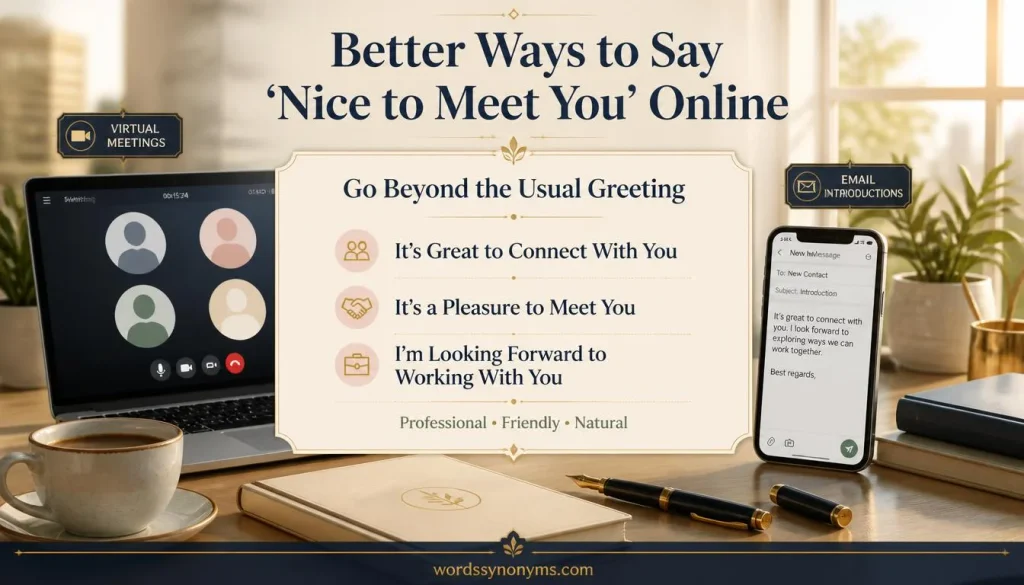
Better Ways to Say “Nice to Meet You” Online
It’s Great to Connect With You
When you want to sound professional without being stiff, “It’s great to connect with you” is an excellent choice. It works especially well in online communication because it focuses on building a connection rather than physically meeting someone.
You can use it in introductory emails, LinkedIn messages, virtual meetings, and conversations with new clients. It sounds friendly while maintaining a professional tone.
For example, imagine that a colleague introduces you to a potential business partner by email. Instead of repeating a standard greeting, you can acknowledge the introduction and express interest in the connection.
Example for email:
Hi Jordan,
It’s great to connect with you. I’m looking forward to learning more about your work and discussing how our teams might collaborate.
Best,
Alex
Example for Zoom:
“It’s great to connect with you. Thanks for making time for this meeting.”
This phrase is particularly useful when you haven’t met someone in person. It feels natural for remote work and professional networking without drawing unnecessary attention to the virtual setting.
It’s a Pleasure to Meet You
Some situations call for a little more formality. “It’s a pleasure to meet you” is a polished alternative that communicates respect and courtesy.
Consider using it when meeting a hiring manager, introducing yourself to a senior colleague, or speaking with an important client. It sounds professional without becoming overly elaborate.
Although the expression is traditional, it still works well in modern business communication. You don’t need to replace every familiar phrase with something unusual to sound sophisticated.
Example for a job interview:
“It’s a pleasure to meet you, Ms. Davis. Thank you for taking the time to speak with me today.”
Example for email:
Dear Dr. Wilson,
It’s a pleasure to meet you. I appreciate the opportunity to discuss the research position and learn more about your team’s work.
Best regards,
Morgan
Notice how the phrase becomes more effective when you add a relevant detail. Thanking the other person for their time or mentioning the purpose of the meeting makes your greeting feel more personal.
Use this expression when you want to establish a respectful tone from the beginning. For a casual conversation with a teammate, however, a simpler greeting may feel more natural.
I’m Glad We Could Connect
“I’m glad we could connect” sounds warm, relaxed, and professional. It expresses appreciation for the opportunity to talk without making the conversation feel formal or scripted.
This phrase works especially well for remote meetings, introductions between colleagues, and networking conversations. It’s also useful when scheduling a conversation took some effort.
For instance, you might have exchanged several emails with a potential collaborator before finally arranging a video call. This expression acknowledges the successful connection.
Example for Zoom:
“I’m glad we could connect today. I’ve been looking forward to hearing more about your project.”
Example for email:
Hi Taylor,
I’m glad we could connect. Your experience in digital marketing sounds interesting, and I’d love to hear more about your recent projects.
Best,
Jamie
The phrase is flexible because it doesn’t assume a particular relationship. You can use it with a new coworker, a professional contact, or someone who shares your interests.
One small detail matters: “I’m glad we could connect” works both before and during a conversation, while a phrase such as “It was great speaking with you” usually belongs after the discussion.
It Was Great Speaking With You
Once a conversation ends, the wording should reflect what happened. “It was great speaking with you” is a natural way to close a Zoom meeting or follow up after a professional call.
Unlike a greeting used at the beginning, this expression acknowledges a conversation you’ve already had. It works well in thank-you emails, client follow-ups, and messages after interviews.
Example after a Zoom meeting:
Hi Chris,
It was great speaking with you today. I appreciated your insights about the upcoming project and will send the revised proposal by Friday.
Best,
Sam
Example after an interview:
“It was great speaking with you today. Thank you for explaining the role and sharing more about the team’s goals.”
The strongest follow-up messages connect the greeting to a real detail from the conversation. Mentioning a useful suggestion, an agreed deadline, or a shared interest makes the message more memorable.
Avoid using this phrase before you’ve actually spoken with the person. If the meeting hasn’t happened yet, choose “I’m looking forward to speaking with you” instead.
Thank You for the Introduction
When someone connects you with a new contact, “Thank you for the introduction” recognizes the person who made that connection. It’s especially useful in professional email threads where a mutual colleague, manager, or client brings people together.
The phrase shows appreciation and helps you respond politely without overcomplicating the message. You can then greet the new contact directly.
Example for an introductory email:
Hi Alex,
Thank you for the introduction.
Hi Morgan, it’s a pleasure to connect with you. I’d be happy to discuss the project and explore how we might work together.
Best regards,
Taylor
This structure works because it acknowledges both people involved. Alex receives thanks for making the introduction, while Morgan receives a direct and welcoming greeting.
You can also use a shorter version when the introduction happens through LinkedIn or another messaging platform:
“Thanks for connecting us, Alex. Morgan, it’s great to meet you virtually.”
However, you don’t need to thank someone for an introduction when no one actually made one. If you contacted the person yourself, “It’s great to connect with you” is usually more appropriate.
I’m Looking Forward to Working With You
When an introduction involves a new job, team, or project, “I’m looking forward to working with you” is a useful alternative. It shifts the focus from the introduction itself to the professional relationship you’re about to build.
This expression works well when you’ve joined a company, started collaborating with a client, or become part of a project team. It communicates enthusiasm without sounding overly casual.
Example for a new coworker:
Hi Priya,
Welcome to the team! I’m looking forward to working with you and collaborating on the upcoming campaign.
Best,
Daniel
Example for a new client:
“It’s great to connect with you. I’m looking forward to working together and helping your team reach its goals.”
There’s an important distinction between this expression and “I’m excited to work together.” The first sounds measured and professional, while the second communicates stronger enthusiasm.
Use this phrase when collaboration is actually expected. If you’re simply meeting someone at a networking event, “It’s great to connect with you” may be a better fit.
I Appreciate the Opportunity to Connect
Some introductions involve a situation where gratitude matters as much as the greeting. “I appreciate the opportunity to connect” communicates respect and acknowledges the other person’s time or willingness to speak with you.
It’s particularly suitable for job interviews, mentorship conversations, professional consultations, and introductions to people whose experience you value.
Example for a job interview:
Dear Ms. Carter,
I appreciate the opportunity to connect and learn more about the position. I’m looking forward to discussing how my experience aligns with your team’s needs.
Sincerely,
Jordan
Example for a mentorship meeting:
“I appreciate the opportunity to connect with you. Your experience in the industry would be valuable as I explore my career options.”
This expression works best when you have a genuine reason to express appreciation. If you’re exchanging a quick greeting with a new coworker, it may sound more formal than necessary.
Keep the message concise, too. A respectful greeting doesn’t need several sentences of thanks to communicate sincerity.
It’s Wonderful to Connect With You
If you want a greeting that feels more enthusiastic than “It’s great to connect with you,” consider “It’s wonderful to connect with you.”
The word “wonderful” adds warmth while preserving a professional tone. It can work well in creative industries, networking conversations, friendly introductions, and messages to people whose work interests you.
Example for professional networking:
Hi Morgan,
It’s wonderful to connect with you. I enjoyed reading about your recent design project and would love to hear more about your approach.
Best,
Casey
Example for a virtual meeting:
“It’s wonderful to connect with you. I’ve heard great things about your team’s work.”
The phrase becomes more meaningful when you explain what makes the connection interesting. A brief reference to someone’s work, experience, or shared interests adds substance to your greeting.
However, enthusiasm should match the situation. In a highly formal exchange, “It’s a pleasure to meet you” may sound more appropriate. Save the warmer wording for conversations where a friendly tone feels natural.
I’m Happy We Had the Chance to Talk
Not every professional interaction needs to sound formal. “I’m happy we had the chance to talk” is a relaxed alternative that expresses genuine appreciation for a conversation.
Use it after an informal Zoom call, a discussion with a new colleague, or a networking conversation that helped you understand someone’s work. It sounds personal without becoming overly familiar.
Example after a virtual conversation:
Hi Jamie,
I’m happy we had the chance to talk today. Your suggestions gave me a few useful ideas to explore, and I appreciate you sharing your experience.
Best,
Riley
Example for a new colleague:
“I’m happy we had the chance to talk. I look forward to getting to know the team better.”
This phrase is particularly useful when you want to acknowledge the value of a conversation rather than simply the introduction.
There’s one detail to remember: it usually works best after you’ve talked. Before a scheduled meeting, say “I’m looking forward to talking with you” instead.
It Was a Pleasure Learning About Your Work
A specific greeting often makes a stronger impression than a generic one. “It was a pleasure learning about your work” acknowledges what you learned and shows interest in the other person’s professional experience.
This expression works well after an informational interview, industry networking call, or conversation with an experienced professional. It’s also helpful when you want to follow up without relying on a standard closing line.
Example after a networking call:
Hi Dr. Wilson,
It was a pleasure learning about your work in environmental research. I especially enjoyed hearing about your latest project and the challenges your team is addressing.
Best regards,
Taylor
Example after a professional introduction:
“It was a pleasure learning about your experience in product management. Thank you for sharing your perspective on building successful teams.”
The strength of this phrase lies in its specificity. Instead of offering a vague compliment, you can mention a project, skill, or idea that genuinely interested you.
Use it only when the conversation gave you something meaningful to discuss. If you haven’t spoken with the person yet, this expression would be premature.
Thanks for Reaching Out
When someone contacts you first, “Thanks for reaching out” is a friendly and direct way to begin your reply. It acknowledges their effort and creates a natural opening for the rest of your message.
This phrase works well in email, LinkedIn messages, professional inquiries, and requests for collaboration. It’s especially useful when the other person introduces themselves or asks whether you’d be available for a conversation.
Example for a first email:
Hi Taylor,
Thanks for reaching out. It’s great to connect with you, and I’d be happy to discuss the details of your proposal.
Best,
Morgan
Example for a LinkedIn message:
“Thanks for reaching out! I’d be happy to connect and learn more about what you’re working on.”
You can adjust the tone based on the relationship. Adding an exclamation point may feel friendly in an informal message, while a straightforward sentence usually works better in a formal business email.
Remember that this expression isn’t exactly interchangeable with “Nice to meet you.” It thanks someone for initiating contact rather than directly expressing pleasure at meeting them. That difference makes it particularly useful in online conversations.
I’m Excited to Work Together
When a new introduction leads to a confirmed collaboration, “I’m excited to work together” communicates enthusiasm about what’s ahead.
It’s suitable for project partners, new clients, teammates, and colleagues who will be working toward a shared goal. The phrase focuses on future cooperation instead of the introduction itself.
Example for a new project:
Hi Alex,
It’s great to connect with you. I’m excited to work together on this project and see what our teams can accomplish.
Best,
Jordan
Example for a new client:
“I’m excited to work together and help bring your plans to life.”
This expression sounds especially natural when both people have already agreed to collaborate. It can feel premature, however, if you’re simply exchanging introductions or exploring a possible partnership.
If the relationship is still developing, choose “I’m looking forward to learning more about your work.” Once the collaboration becomes definite, a more enthusiastic message may fit.
The goal isn’t to sound excited at all costs. It’s to communicate genuine interest in the work ahead.

Better Ways to Say “Nice to Meet You” in Different Online Situations
Choosing a phrase becomes easier when you consider the communication channel. A live video call has different expectations from an email, even when both interactions involve the same person.
What to Say When Meeting Someone on Zoom for the First Time
A Zoom introduction should sound natural when spoken aloud. You don’t need a complicated greeting to make a good first impression.
Try one of these expressions:
- “It’s great to connect with you.”
- “It’s a pleasure to meet you.”
- “I’m glad we could connect today.”
- “Thanks for making time for this meeting.”
- “I’m looking forward to hearing more about your work.”
For example, when joining a project meeting with a new client, you could say:
“Hi, Jordan. It’s great to connect with you. Thanks for making time today. I’m looking forward to discussing the project.”
This greeting works because it introduces warmth without delaying the conversation. Afterward, you can move directly into the meeting’s purpose.
Practical tip: If several people are joining the call, keep your introduction brief. A long greeting can slow down the meeting before everyone has had a chance to speak.
What to Say in an Introductory Email
Email gives you more room to provide context, but a long opening can make your message harder to read. Choose one greeting and move into the reason for writing.
Here are three examples for different situations.
Professional introduction
Hi Morgan,
It’s great to connect with you. I’m reaching out to introduce myself before our upcoming project meeting.
Best,
Alex
Reply to a referral
Hi Morgan,
Thank you for the introduction, Alex.
Hi Taylor, it’s a pleasure to connect with you. I look forward to discussing the project.
Best regards,
Jordan
First contact with a potential collaborator
Hello Jamie,
Thanks for reaching out. I’d be happy to connect and learn more about your proposal.
Best,
Riley
Each message follows the same basic principle: greet the recipient, establish the context, and explain what comes next.
What to Say After a Zoom Meeting
A post-meeting message should acknowledge the conversation and, when appropriate, mention the next step. Simply repeating “Nice to meet you” doesn’t make the most of the opportunity.
Consider these alternatives:
- “It was great speaking with you today.”
- “I enjoyed our conversation.”
- “Thank you for sharing your insights.”
- “I appreciate your time today.”
- “I’m looking forward to our next discussion.”
For example:
Hi Chris,
It was great speaking with you today. I appreciated your feedback on the proposal and will send the updated version tomorrow.
Best,
Sam
This message is effective because it combines a polite closing with a clear commitment. The recipient knows both that you valued the conversation and what to expect next.
What to Say When Connecting on LinkedIn
LinkedIn messages usually benefit from a warm, direct tone. A brief reference to the other person’s experience can make your greeting feel less generic.
For example:
Hi Morgan,
It’s great to connect with you. I noticed your work in content strategy and enjoyed reading about your recent campaign.
Best,
Taylor
You could also write:
“I’m glad we could connect. I’d love to follow your work in digital marketing.”
Avoid making a first message sound like an elaborate sales pitch. Start with a genuine connection, then explain your purpose if you have a specific reason for reaching out.
Can You Say “Nice to Meet You” Over Email or Zoom?
Yes. “Nice to meet you” is perfectly acceptable in online communication. You don’t need a special phrase just because the introduction happens through a screen.
The best wording depends on whether you’re meeting someone live, exchanging messages, or following up after a conversation.
Is “Nice to Meet You” Appropriate in Email?
Yes. You can use it when someone introduces you to a colleague, when you contact a new professional connection, or when you begin communicating with a client.
For example:
Hi Jordan,
It’s nice to meet you. I’ve heard about your team’s work and look forward to learning more about the project.
Best,
Taylor
However, if you haven’t spoken directly with the person, “It’s great to connect with you” may feel more natural. Both expressions work, so there’s no need to avoid the traditional greeting.
Should You Say “Nice to E-Meet You”?
“Nice to e-meet you” is an understandable expression that refers specifically to meeting electronically. Some people use it in introductory emails, especially when they haven’t met the recipient in person.
However, it can sound unnecessary because the context already makes the online nature of the interaction clear.
Compare these examples:
- Less direct: “It’s nice to e-meet you through this email correspondence.”
- More natural: “It’s great to connect with you.”
- More formal: “It’s a pleasure to meet you.”
The simpler versions communicate the same idea without drawing attention to the communication method.
Is “Nice to Virtually Meet You” Correct?
Yes. People understand what “nice to virtually meet you” means, and it can work in a lighthearted or informal setting. However, it isn’t necessary for most professional conversations.
If you’re introducing yourself on Zoom, simply saying “It’s nice to meet you” sounds natural. If you’re writing an email, “It’s great to connect with you” usually flows better.
The takeaway: Choose the expression that suits your tone and relationship. Online communication doesn’t require a separate greeting for every platform.
How to Choose the Right Alternative to “Nice to Meet You”
The most effective greeting isn’t necessarily the most creative one. It’s the phrase that fits the moment without making the conversation feel forced.
Match the Level of Formality
Your relationship with the recipient should guide your wording.
| Situation | Best expression |
| Job interview | It’s a pleasure to meet you. |
| Senior executive introduction | I appreciate the opportunity to connect. |
| New teammate | I’m looking forward to working with you. |
| Casual professional networking | It’s great to connect with you. |
| Friendly online conversation | I’m glad we could connect. |
When you’re unsure, start with a polite, straightforward expression. You can always adopt a more casual tone as the relationship develops.
Consider When You’re Speaking
Timing matters just as much as tone. Some expressions suit the beginning of a conversation, while others belong at the end.
- Before or at the beginning: “It’s a pleasure to meet you.”
- During an introduction: “I’m glad we could connect.”
- After a conversation: “It was great speaking with you.”
- After a productive discussion: “I enjoyed hearing your ideas.”
- Before future collaboration: “I’m looking forward to working with you.”
Using the right tense makes your message sound natural. For example, saying “It was great speaking with you” before the meeting has started creates a confusing impression.
Make Your Greeting Specific
A small personal detail can turn an ordinary greeting into a meaningful introduction.
Instead of writing, “It’s great to connect with you,” consider mentioning a shared interest or the purpose of your meeting.
For example:
“It’s great to connect with you. I’m looking forward to discussing your team’s approach to customer research.”
The second sentence gives the recipient a reason to believe you’re interested in the conversation. It also creates a natural transition into the main topic.
Specificity doesn’t require a lengthy message. One relevant detail is often enough.
Keep the Message Natural
You don’t need to combine several greetings to sound polite. In fact, too many pleasantries can make a short message feel awkward.
For example:
“It’s a pleasure to meet you. I’m delighted to connect with you and truly excited about this wonderful opportunity.”
A simpler version works better:
“It’s a pleasure to meet you. I’m looking forward to discussing the project.”
Both versions express goodwill, but the second gets to the point faster.
A useful rule: Choose one greeting, add a relevant detail when appropriate, and move into the conversation.
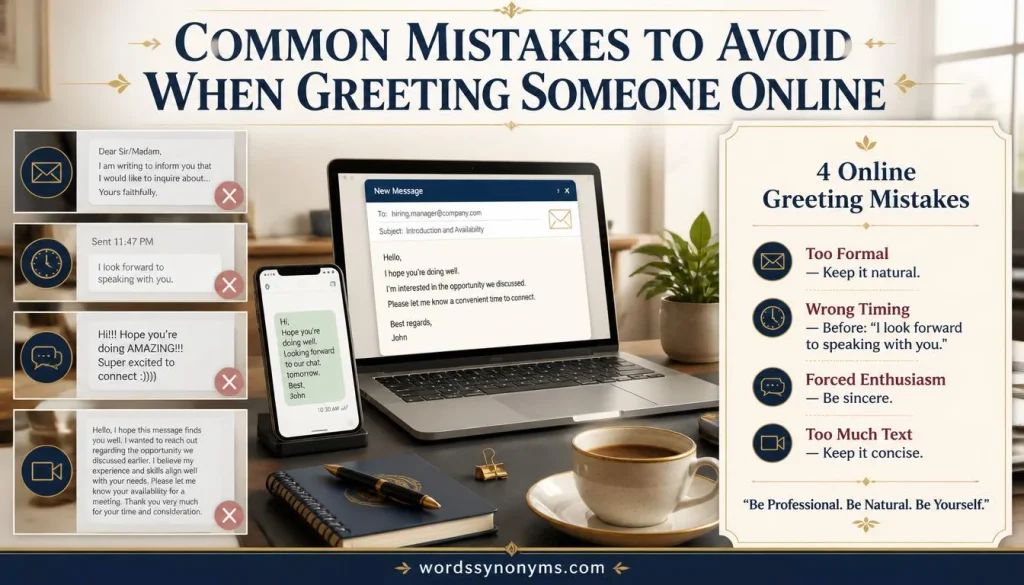
Common Mistakes to Avoid When Greeting Someone Online
Even a good phrase can sound awkward when you use it in the wrong context. A few simple adjustments can help your messages feel more natural.
Using Formal Language in Every Situation
Formal expressions are useful during interviews and important business introductions. However, they can sound stiff when you’re greeting a new teammate or responding to a friendly message.
For example, “I appreciate the opportunity to make your acquaintance” is grammatically understandable, but it may feel unnecessarily elaborate in a casual work chat.
A simple “It’s great to connect with you” usually works better.
Using a Closing Phrase Before the Conversation
Phrases such as “It was great speaking with you” refer to a conversation that has already happened. Using them before a call begins can confuse the recipient.
Before the meeting, write:
“I’m looking forward to speaking with you.”
After the meeting, write:
“It was great speaking with you.”
This small difference makes your communication more precise.
Sounding More Enthusiastic Than You Feel
Enthusiastic phrases can help establish a friendly tone, but exaggerated excitement may seem insincere.
For example, “I’m absolutely thrilled to connect with you” might feel excessive when you’re exchanging a routine business email.
Choose wording that reflects your actual feelings. A simple, sincere greeting is more effective than forced enthusiasm.
Forgetting to Acknowledge the Context
A greeting should fit the reason you’re contacting someone.
1. If a colleague introduces you to a client, thank the colleague for making the connection.
2. If someone emails you first, acknowledge their message.
3. If you’ve just completed a meeting, refer to the conversation.
These small choices show that you’re responding thoughtfully rather than sending a generic template.
Making the Message Too Long
A first greeting doesn’t need a full paragraph of compliments and pleasantries. Keep your opening focused, especially when communicating with busy professionals.
A concise message can still sound warm:
“Thanks for reaching out, Morgan. It’s great to connect with you. I’d be happy to discuss the proposal.”
That’s enough to establish a friendly tone and move the conversation forward.
Read more: 7 Words to Describe the Feeling of Missing Someone
FAQs
What is another way to say “Nice to meet you” online?
You can say “It’s great connecting with you,” “I’m glad we could connect,” or “It’s a pleasure to meet you virtually.” Choose a phrase that matches your relationship and the situation.
How do you say “Nice to meet you” in a professional email?
In a professional email, try “It’s a pleasure to connect with you” or “I’m pleased to make your acquaintance.” Both sound respectful and work well when contacting clients, colleagues, or business partners.
Is “Nice to e-meet you” grammatically correct?
Yes, “Nice to e-meet you” is an accepted informal expression for meeting someone online. It works well in emails and virtual introductions, although “It’s nice to connect with you” often sounds more natural.
What should you say when meeting someone for the first time on Zoom?
You can say “It’s great to meet you,” “I’m happy to finally connect,” or “Thanks for taking the time to meet with me.” For professional meetings, keep your greeting friendly and appropriate to the setting.
How can I sound friendly without being too informal online?
Use a warm but respectful phrase, such as “I’m glad we have the chance to connect.” Avoid overly casual slang when speaking with new clients, managers, or professional contacts.
Should I use the same greeting in every online conversation?
No. Adjust your greeting to fit the person and context. A business email may need a polished expression, while a casual video chat can use a relaxed greeting. Varying your words helps you sound more natural and thoughtful.
Conclusion
Choosing the right words can make online introductions feel warmer and more genuine. Instead of always saying “Nice to meet you,” try alternatives like “It’s great connecting with you” or “I’m glad we could connect.” The best phrase depends on your audience, the situation, and the impression you want to create. Whether you’re joining a virtual meeting, writing a professional email, or meeting someone through networking, a thoughtful greeting helps you start the conversation on a positive note.
You don’t need complicated expressions to sound confident or professional. Focus on being clear, friendly, and respectful while choosing words that fit your natural communication style. With these 12 better ways to say “Nice to meet you” online, you can make virtual introductions less repetitive and more engaging. A simple change in your greeting may open the door to a stronger connection and a more meaningful conversation.


